


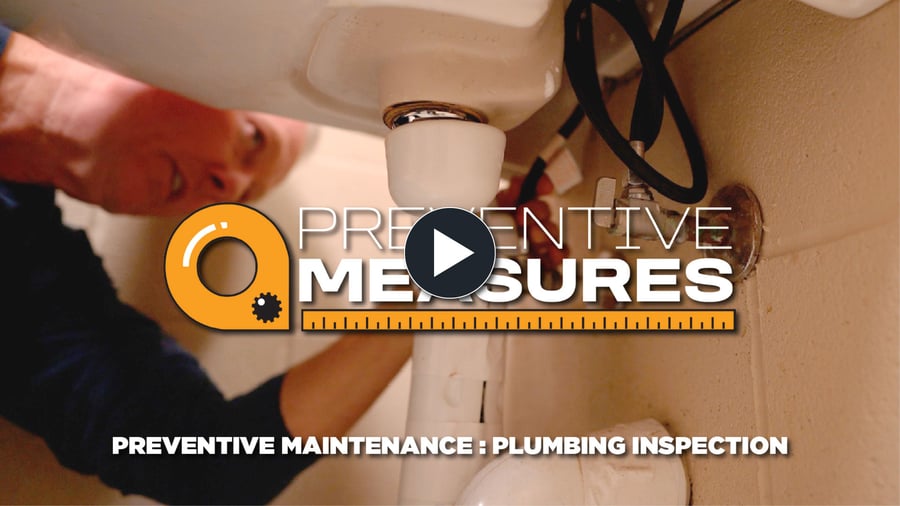
In facility management, hidden plumbing failures represent one of the costliest threats to your budget and building integrity. By the time water damage becomes visible, a puddle in the hallway or a ceiling stain, thousands of dollars in repairs to sub-flooring, drywall, and infrastructure are already inevitable. The solution? A strategic preventive maintenance program powered by modern CMMS software. In our latest episode of Preventive Measures, maintenance expert Brian Kingsland takes us through a real-world plumbing inspection, proving that a "quick look" isn't enough to protect your facility. To stay ahead, you need a strategy that moves your team away from firefighting and toward a streamlined approach using facility management software.
Why Reactive Maintenance Destroys Your Maintenance Budget
Operating without a computerized maintenance management system (CMMS) forces teams into expensive reactive cycles. Every emergency plumbing repair compounds costs through:
- Emergency Service Premiums: After-hours and weekend rates increase labor costs by 200-300%
- Accelerated Asset Depreciation: Undetected moisture exposure reduces equipment lifespan by 40-60%
- Operational Downtime: In healthcare and senior living facilities, closed restrooms create compliance violations and safety risks
- Hidden Water Damage: Structural repairs from slow leaks average $10,000-$50,000 per incident
Maintenance management software eliminates these reactive costs by automating preventive maintenance schedules and creating accountability through digital work order tracking.
3 Expert Secrets for a Better Plumbing Audit
With 16 years of experience, Brian Kingsland knows that a digital work order software is only as good as the data you put into it. Here are three takeaways from his plumbing audit:
1. The "Physical" Inspection
Brian notes that eyes can be deceived. You must physically feel the supply lines and the underside of the P-trap. Mineral deposits often create "pitting" that is invisible from a distance but indicates a pipe is about to fail.
2. Check the Cartridge, Not Just the Tap
A common failure point is the internal faucet cartridge. Even if the sink isn't dripping into the basin, a worn cartridge can allow water to seep backward into the vanity or wall. Brian recommends a "handle-tension" check during every audit to ensure internal seals are tight.
3. Consistency is Key
Plumbing shouldn't be an annual thought. A bi-annual (twice yearly) preventive maintenance audit is the industry gold standard to catch small issues before they become catastrophic failures.
PRO-TIP: The Repair vs. Replace
Use your CMMS software to track how often a specific asset fails. If you’re repairing the same faucet three times a year, your asset tracking data will prove it’s more cost-effective to replace the fixture than to keep paying for labor and parts.
Transform Maintenance Operations with CMMS Software Features
If your team is still using paper binders to track these audits, critical information is likely getting lost. This is where maintenance management software transforms your operations from "guessing" to "knowing."
By utilizing CMMS software, you can:
-
Automated Preventive Maintenance Scheduling: Never "forget" a bi-annual audit again. The system triggers the task automatically based on your preferred frequency.
-
Standardized Digital Checklists for Quality Control: Attach Brian’s specific steps (Check P-traps, test cartridges, verify supply lines) directly to the mobile work order so every technician follows the same high standard.
-
Compliance Documentation and Audit Trails: For industries like healthcare, having a timestamped record of every plumbing audit is vital for proving "reasonable care" during insurance or compliance inspections.
-
Asset Performance Analytics and Lifecycle Management: CMMS software aggregates maintenance history across all plumbing assets, revealing failure patterns and optimizing replacement timing. This asset tracking capability extends equipment lifespan by 30-40% while reducing emergency repairs by 60%.
Advanced Facility Management: IoT Integration with CMMS Platforms
While scheduled audits capture point-in-time conditions, wireless sensor integration provides 24/7 facility monitoring. Modern work order software connects with IoT devices that detect:
-
Temperature Drops: Prevent frozen pipe disasters with automatic alerts when temperatures approach freezing thresholds
- Moisture Detection: Identify leaks under vanities and behind walls within minutes, not months
- Pressure Fluctuations: Detect supply line failures before catastrophic breaks occur
- Flow Anomalies: Identify running toilets and hidden leaks that waste thousands in water costs
These sensors automatically generate work orders in your CMMS software when thresholds are exceeded, enabling immediate response before minor issues become major failures.
Implement Preventive Maintenance Best Practices with Maintenance Care CMMS
Brian Kingsland's demonstrates that facility maintenance management excellence requires both expert techniques and powerful technology. Maintenance Care's CMMS platform transforms reactive maintenance cultures into proactive operations through:
- Unlimited preventive maintenance scheduling with customizable frequencies
- Mobile-optimized work order software for field technicians
- Comprehensive asset tracking with maintenance history and lifecycle analytics
- Automated compliance reporting for healthcare and regulated industries
- IoT sensor integration for real-time facility monitoring
- Vendor management and parts inventory tracking
Frequently Asked Questions About CMMS and Preventive Maintenance
What is CMMS software and how does it prevent plumbing failures?
CMMS (Computerized Maintenance Management System) software automates preventive maintenance scheduling, tracks asset performance, and generates work orders before equipment failures occur. For plumbing systems, CMMS platforms schedule bi-annual inspections, document audit findings, and alert teams to recurring issues that indicate replacement needs.
How often should facilities conduct plumbing preventive maintenance audits?
Industry best practices recommend bi-annual (twice yearly) comprehensive plumbing audits for commercial facilities. Healthcare, senior living, and high-occupancy buildings may require quarterly inspections. CMMS software automates these schedules and ensures consistent compliance.
What ROI can facilities expect from implementing maintenance management software?
Facilities typically achieve 25-35% maintenance cost reduction within the first year of CMMS implementation. Additional benefits include 60% fewer emergency repairs, 30-40% extended asset lifespan, and 95%+ preventive maintenance compliance rates.
Can CMMS software integrate with IoT sensors for real-time monitoring?
Modern facility management software platforms integrate with wireless sensors for temperature, moisture, pressure, and flow monitoring. These IoT devices automatically generate work orders when thresholds are exceeded, enabling immediate response to plumbing issues before catastrophic failures occur.
How does asset tracking in CMMS improve repair vs. replace decisions?
Work order software tracks every repair, part replacement, and labor hour for each asset. When maintenance history shows three or more repairs annually on the same fixture, CMMS analytics prove replacement delivers better ROI than continued repairs, typically saving 40-60% over the asset's remaining lifespan.
Stop the Leaks Before They Start
As Brian shows in the video, the difference between a well-run facility and a crumbling one is the quality of the inspection. By combining expert techniques with the power of Maintenance Care, you turn maintenance into a competitive advantage.
Want to see Brian’s audit in action? Watch the Full Video Here!
Ready to automate your preventive maintenance? Book a Personalized Demo or get started today with our Free Work Order Software.


.svg)