EAM vs CMMS for Manufacturers in 2026

August 17, 2026
13 min
Preventative

Manufacturing Asset Management: Complete Guide for Modern Plants


Manufacturing plants run on equipment, and equipment runs on attention. When that attention is structured, data-backed, and consistent, production hums. When it's not, you get emergency repairs at 2 a.m. and missed shipments on Monday. This guide walks through everything plant managers and maintenance leaders need to build a manufacturing asset management program that actually works: from asset registers and maintenance strategies to spare parts coordination and compliance readiness.


Key Takeaways on Manufacturing Asset Management

Manufacturing asset management is a strategic approach to tracking equipment throughout its lifecycle, ensuring every machine, system, and supporting asset delivers maximum value with minimum unplanned disruption. In 2026, with labor pressures mounting and supply chains still volatile, getting this right isn't optional: it's the difference between plants that hit targets and plants that fight fires.

  • Effective asset management aims to maximize equipment uptime and lower operational costs across both discrete and process manufacturing.

  • A clear maintenance strategy covering the entire asset lifecycle from procurement through decommissioning, directly improves asset performance, safety outcomes, and energy efficiency.

  • Reducing unplanned downtime is one of the most measurable benefits; plants with structured programs see double-digit improvements in availability and profitability.

  • Operational efficiency gains compound when maintenance work management, inventory tracking, and compliance are handled inside a single system rather than scattered across spreadsheets.

  • Cloud CMMS and EAM platforms like Maintenance Care help centralize work orders, preventive maintenance schedules, asset tracking, and reporting so maintenance teams operate from one source of truth.


What Is Manufacturing Asset Management?

Manufacturing asset management is the coordinated control of physical assets, IT/OT systems, and financial resources used to produce goods in a plant. It covers everything from the CNC machine cutting parts on the floor to the capital budget that funds its eventual replacement.

The scope spans the entire asset lifecycle:

  • Planning and procurement

  • Commissioning

  • Day-to-day operation

  • Ongoing asset maintenance

  • Upgrades

  • Final decommissioning

Each stage influences total cost of ownership and the value an asset delivers over its service life. Key components of asset management include:

  • Asset tracking

  • Maintenance management

  • Compliance tracking

These work together to keep production running and risks contained.

Unlike generic IT asset management or financial portfolio management, plant-specific manufacturing asset management deals with industrial equipment that faces wear, vibration, thermal stress, and regulatory scrutiny. Think conveyors, compressors, robotic weld cells, packaging lines, and boilers.

  • Asset maintenance covers hands-on servicing and repair.

  • Maintenance management encompasses scheduling, work orders, planning, and resource allocation.

  • Enterprise asset management (EAM) extends these functions to include lifecycle cost analysis, procurement, depreciation, and risk.

A modern computerized maintenance management system like Maintenance Care serves as the practical backbone for day-to-day manufacturing asset management, handling work order tracking, preventive task scheduling, asset registries, parts inventory, and performance reporting.
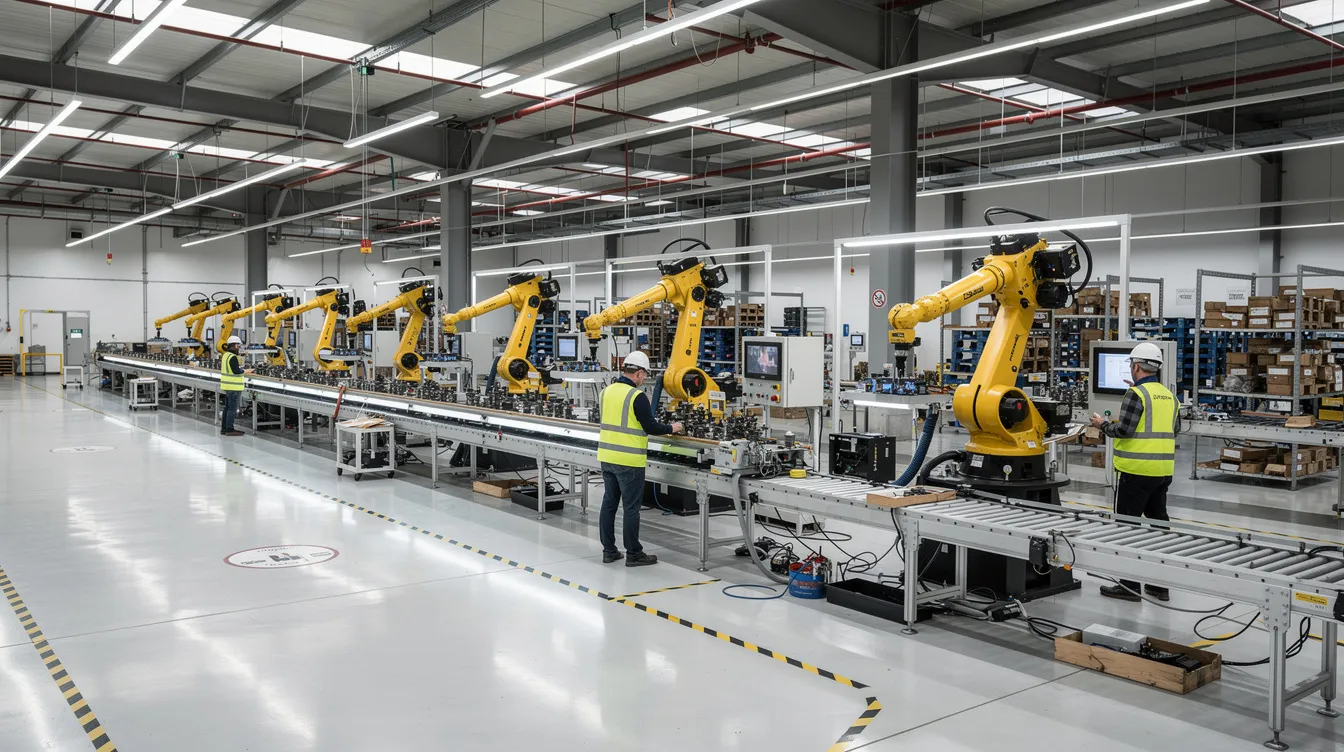
The image shows a wide-angle view of a modern manufacturing plant floor, featuring conveyors and robotic arms actively at work, while workers in safety vests inspect equipment. This environment emphasizes effective asset management and maintenance management processes, highlighting the importance of optimizing asset performance and ensuring equipment reliability in production systems.


Types of Assets in a Manufacturing Environment

Manufacturing asset management covers far more than production machines. A comprehensive program accounts for every system that keeps the plant running, safe, and compliant across four main asset classes:

Physical Production Assets

Industrial equipment directly tied to output, including presses, injection molding machines, SMT lines, packaging lines, forklifts, cranes, and robotic arms.

  • Automotive paint booths and weld rigs
  • Food & Beverage Clean In Place (CIP) systems
  • Metals furnaces and rolling mills
  • Primary output machinery

Supporting Infrastructure Assets

The foundational physical systems that production depends on to run safely and smoothly, often overlooked until a failure occurs.

  • HVAC and environmental controls
  • Fire suppression & emergency generators
  • Loading docks and plant lighting
  • Building envelope maintenance

IT and OT Operational Technology Assets

Hardware and connected systems that feed real-time performance and health data directly back into CMMS and EAM management platforms.

  • PLCs and SCADA systems
  • Industrial PCs and network gateways
  • Vibration and temperature IoT sensors
  • Continuous condition monitoring

Financial and Reserve Assets

The capital, reserves, and inventories tied directly to equipment lifecycle cost analysis and repair-versus-replace decisions.

  • Capital equipment budgets
  • Depreciation & maintenance reserves
  • Spare parts inventory investment
  • Lifecycle ROI and payback analysis


Why Manufacturing Asset Management Matters in 2026

Manufacturing operates under heightened pressure in 2026. Labor shortages make every technician's time more valuable. Energy costs remain volatile. Supply chain disruptions still ripple through raw materials availability. ESG reporting requirements are expanding. Against this backdrop, the ability to maintain assets effectively and optimize operations becomes a competitive advantage rather than a back-office function.

Well-managed assets support higher Overall Equipment Effectiveness: availability (fewer breakdowns), performance (faster cycle times), and quality (fewer defects). When production processes run smoothly, on-time delivery improves. When they don't, the costs are staggering.

800 Hours Avg. yearly downtime per large plant
$852 Million Weekly cost of unplanned downtime globally
$1.7 Million Hourly cost in asset-intensive industries

Data Source: 2025 global industry report & Fluke Reliability

Maintenance management systems improve production efficiency by reducing downtime, cutting emergency parts spend, and stabilizing production capacity. On the compliance side, poorly maintained equipment can trigger OSHA violations, FDA audit failures, ISO 55000 non-conformances, and environmental incidents, any of which can halt business operations entirely.

Structured asset maintenance also feeds better operations management decisions. Improved data-driven decision-making relies on real-time visibility into asset performance, letting managers shift from guesswork to evidence when allocating budgets and scheduling overhauls.

Core Pillars of Manufacturing Asset Management

Think of these pillars as the framework that holds your entire program together. Each one supports the others, and weakness in any single area undermines the whole system. Some teams reference the maintenance excellence pyramid as a maturity model: you build foundational elements before layering on advanced analytics.

Asset Data and Hierarchy

Accurate, complete records for every asset, organized from site down to component level. This is where all maintenance management processes start.

Maintenance Strategy

The mix of reactive, preventive, condition-based, and predictive approaches applied to each asset class based on criticality and risk. Your asset strategies define how resources get allocated.

Maintenance Work Management

The end-to-end work management process from request through execution and closeout, including planning, scheduling, and documentation.

Inventory and Spare Parts

Materials management practices that prevent both stockouts and excess inventory, tied directly to maintenance schedules and equipment bills of materials.

Human Resources

Technician skills, certifications, training, and retention, because no software replaces a capable person with the right wrench.

Performance Management

KPIs, dashboards, and data analysis that reveal trends, highlight chronic problems, and justify investment.

Risk, Compliance, and Safety

Managing safety obligations, environmental compliance requirements, and audit readiness across the maintenance environment.


A CMMS like Maintenance Care is used to operationalize all these pillars within a single system of record, making it possible to recognize maintenance management processes that need attention and act on them quickly.
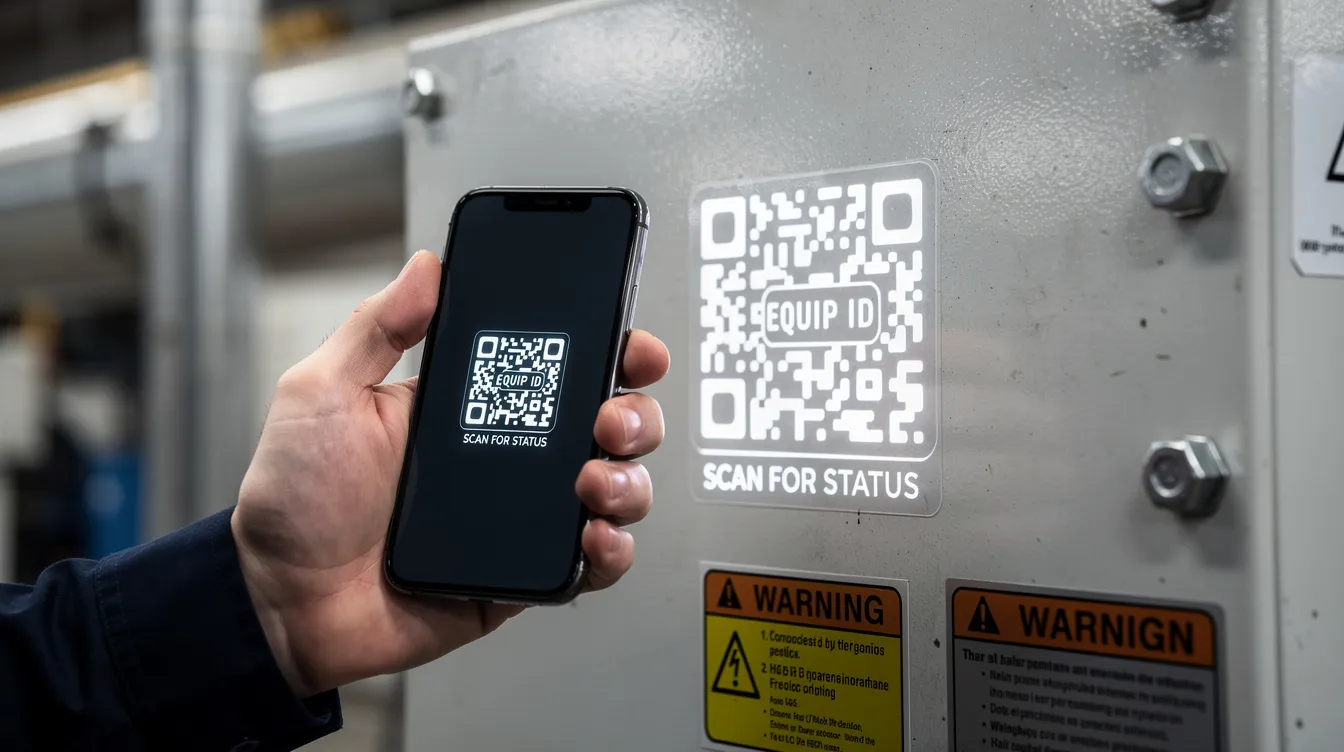
A maintenance technician is closely scanning a QR code on industrial equipment with a smartphone, demonstrating the use of technology in asset management to optimize asset performance and support maintenance management processes. This action highlights the importance of managing data efficiently within the entire asset lifecycle.


Building an Accurate Asset Register and Hierarchy

Every effective asset management program starts with knowing what you have, where it is, and why it matters. An incomplete or outdated asset register is like navigating a plant with half the lights off: you'll miss problems until they become emergencies.

For each asset, capture:

  • Unique asset ID and description
  • Location (building, floor, line, position)
  • Manufacturer, model, and serial number
  • Criticality rating (how badly does production suffer if this fails?)
  • Warranty dates and service contracts
  • Safety-related information (lockout/tagout points, hazardous materials)

Structure these records into a clear hierarchy to ensure that asset data rolls up cleanly for reporting and work assignment:

Hierarchy Structure: Site connects to Area, Area connects to Line, Line connects to System, System connects to Equipment, Equipment connects to Component.

Visual flowchart showing the progression from Site to Area to Line to System to Equipment to Component. Site Area Line System Equipment Component

When a conveyor motor fails, you should be able to see it in context: which line, which area, and what downstream impact.

The global asset tracking market was valued at $21.25 billion in 2023, reflecting how seriously organizations take this foundation. Asset tracking technologies include:

  • RFID
  • GPS
  • Barcode systems (with 47% of organizations using barcodes for asset tracking)
  • Real-time location systems (RTLS) that use multiple technologies for higher accuracy in large facilities

Asset tracking improves asset visibility and reduces theft, particularly relevant for mobile assets like forklifts and portable test equipment.

With a mobile CMMS app from a platform like Maintenance Care, technicians scan a barcode or QR code on the plant floor and instantly pull up history, manuals, and open work orders.

Maintenance Strategy: From Run-to-Failure to Predictive

The evolution of maintenance strategies in manufacturing follows a clear arc: reactive (fix it when it breaks), preventive (service it on a schedule), and predictive (monitor it and intervene before failure). Most plants operate with a blend, and the key is matching the right approach to each asset.

Reactive Maintenance

Run-to-failure is acceptable for low-cost, non-critical items: think a break room light fixture. But for safety-critical or production-critical machines, establishing preventive maintenance standards is essential for managing critical assets effectively.

Preventive Maintenance

Regular maintenance can extend the lifespan of manufacturing equipment, and preventive maintenance can extend equipment life by several years. Servicing machinery every three months, for example, can significantly improve equipment reliability on high-use production lines.

Reliability centered maintenance provides a structured methodology for deciding the right tactic per asset class. It uses failure analysis to understand how strategy choices affect risk and cost, then assigns the appropriate mix of tasks. Production methodologies maintenance managers depend on, like lean or TPM, often integrate with RCM to align maintenance with production goals.

Predictive Maintenance

For high-value assets like turbines, bottling lines, or large compressors, predictive maintenance uses data to anticipate equipment failures before they happen. Device monitoring can include tracking parameters like vibration and temperature, fed by IoT sensors into analytics platforms. Maintenance teams receive alerts when equipment shows signs of wear, enabling intervention before a breakdown. Regular checks on equipment condition are crucial to minimize unexpected repairs, and regular maintenance can reduce equipment downtime by over 20%.

Maintenance Care supports this spectrum: you can schedule preventive tasks, track condition data, and document completed work as part of a new maintenance strategy, or refine an existing one.


Maintenance Work Management on the Plant Floor

Maintenance work management is the process that moves a problem from "someone noticed something wrong" to "it's fixed, documented, and closed." Done well, it's the engine that turns maintenance strategies into results. Done poorly, work falls through cracks, priorities get muddled, and technicians waste time chasing information.

Work order management includes planned and unplanned maintenance tasks. Requests should be captured through multiple channels:

  • Web portal
  • Mobile app
  • QR code scan on the equipment itself

Each request should include clear problem descriptions and priority levels. Effective work management ensures maintenance is done at the right time, not just when someone remembers.

Planning and scheduling best practices include:

  • Grouping tasks by line, shift, or skill set to reduce changeovers and overtime
  • Using work coordination methods that match technician certifications to job requirements
  • Blocking scheduled windows for planned maintenance so production can plan around them

Work order management software like Maintenance Care supports labor assignment, time tracking, and documentation: photos, checklists, and complete asset history. Work order management improves communication between maintenance teams and operations, and fostering cross-functional collaboration enhances communication between these groups further.

EAM systems track maintenance activities from request to completion, creating an audit trail that supports both performance analysis and compliance. In larger plants with campus-style facilities or on-site warehouses, the same work management process handles facility requests alongside production equipment, keeping everything in one system and operating in an efficient manner.

Two maintenance workers in hard hats are collaborating while reviewing a tablet next to large industrial machinery, focusing on optimizing asset performance and enhancing maintenance management processes. Their teamwork highlights the importance of effective asset management in maintaining equipment reliability and operational efficiency.


Managing the Entire Asset Lifecycle

A structured approach to asset life cycle management includes acquisition, maintenance, and replacement strategies. In a manufacturing context, this means managing every stage:

  • Specification
  • Procurement
  • Installation
  • Operation
  • Maintenance
  • Upgrades
  • Disposal

Lifecycle cost, or total cost of ownership, goes well beyond purchase price. It includes:

  • Energy consumption
  • Maintenance spend
  • Downtime losses
  • End-of-life handling

A machine with a low purchase price but high failure rates and expensive spares may cost far more over its entire lifecycle than a premium alternative. Cost analysis and project analysis during procurement prevent these surprises.

Integrating CMMS data with capital planning supports decisions about repair versus replace for equipment that's been running for 10 to 20 years. Common lifecycle triggers include:

  • End of warranty, when repair costs shift fully to the plant
  • Rising failure frequency that signals an asset's lifecycle is entering its wear-out phase
  • Safety incidents linked to aging components
  • Technology obsolescence making spare parts unavailable

Enterprise asset management and EAM platforms can automate maintenance schedules and assignments across an asset's full life. CMMS supports data-driven decision-making for asset management by surfacing the maintenance history and cost trends that justify capital requests. Maintenance Care focuses on the maintenance-heavy phases where ROI is highest, while larger EAM suites add procurement, financial depreciation, and multi-site portfolio views.

People and Human Resources in Maintenance

Maintenance is a people-driven function. The best CMMS in the world won't help if there's no one qualified to execute the work it schedules. The maintenance management role has evolved from reactive firefighting to strategic planning, and the people filling that role need support.

The skills gap is real. Experienced technicians are retiring faster than replacements are being trained, and current maintenance departments often struggle to transfer decades of institutional knowledge. Human resources practices relate directly to maintenance outcomes: role definitions, orientation training programs, certification tracking, and succession planning all fall within this intersection. Employee development isn't a nice-to-have; continuous workforce training helps reduce operational errors and improves maintenance outcomes.

Human resources and maintenance leadership should collaborate on:

  • Clear role definitions with required certifications and skill progressions
  • Technician shortage strategies that address recruiting and retention
  • Digital procedures and checklists in the CMMS that capture tribal knowledge before it walks out the door
  • The union management interface, where applicable, to ensure work rules and maintenance processes align

Safety culture is non-negotiable. Job planning must protect technicians working on high-risk assets: lockout/tagout steps captured in digital work orders, confined space procedures, and fall protection requirements should be embedded in every relevant task. Human resources practices that prioritize safety directly strengthen the maintenance environment.

Spare Parts, Inventory, and Supply Chain Coordination

Poor spare parts management can negate even the best maintenance strategy. A perfectly scheduled preventive task means nothing if the bearing it requires is backordered for six weeks.

Critical Spares

Items for high-criticality assets where a stockout stops production (e.g., specialty motors, PLC modules, custom gears)

Consumables

Filters, lubricants, belts, and gaskets used routinely across multiple assets

Standard Catalog Items

Common bearings, fasteners, and electrical components available with short lead times

Set reorder points and minimum/maximum levels for each category. Inventory management tied to asset usage data prevents both overstock (tying up capital) and stockouts (stopping lines). Raw materials for maintenance (welding wire, cleaning solvents, packing materials) should be tracked with the same rigor.

Tracking parts usage in a CMMS improves forecasting and highlights which assets consume the most spares. Supply chain management integration lets maintenance teams trigger purchase requests directly from the system when stock hits reorder levels, connecting maintenance management functions to procurement without manual handoffs. This supply chain coordination is especially valuable when lead times are long or vendors require minimum order quantities.

Materials management discipline, combined with good asset data, turns spare parts from a cost center into a controllable variable.

Key Metrics and Analytics for Asset Performance

You can't improve what you don't measure, and modern manufacturing plants have too much at stake to rely on gut feel. Performance management grounded in data analysis separates top-performing maintenance organizations from the rest.

Core metrics every plant should track:

Performance Metric What It Measures Target Indicator
MTBF (Mean Time Between Failures) Reliability and time between breakdowns Higher is better
MTTR (Mean Time to Repair) Efficiency of the maintenance response Lower is better
Planned vs. Unplanned Work Proactive vs. reactive maintenance ratio > 80% Planned
Schedule Compliance Reliability in completing scheduled tasks Higher is better
Spare Parts Turns Efficiency of inventory capital Optimized (No excess)
Asset Uptime Overall equipment availability Maximized

CMMS helps organizations optimize maintenance schedules based on usage data, and dashboards and reports in asset management software visualize these KPIs by line, area, or asset type. Historical trends help identify chronic bad actors: assets with a significant maintenance issue pattern that justifies capital replacement or redesign.

To manage data efficiently, standardize how technicians close out work orders:

  • Actual time
  • Parts used
  • Failure codes
  • Root cause

This discipline turns individual repairs into a dataset that drives overall asset performance improvements. Maintenance Care can export or display these metrics to support weekly production and maintenance meetings, helping teams optimize asset performance over time.

MC-CTA-BOOK A DEMO-1000x200

Risk, Compliance, and Safety in Manufacturing Asset Management

Asset management connects directly to risk reduction across worker safety, product quality, and environmental impact. When equipment fails unexpectedly, the consequences go beyond downtime: managing safety becomes a priority because people, products, and the environment are all at risk.

Compliance tracking ensures machinery meets safety standards to avoid workplace hazards. EAM systems ensure compliance with health and safety regulations by maintaining digital records of inspections, certifications, and corrective actions. Risk assessments identify threats related to compliance and safety, allowing maintenance managers to prioritize resources toward the highest-risk equipment.

Regulatory and customer requirements vary by sector:

  • OSHA inspections and lockout/tagout documentation
  • FDA audits for pharmaceutical and food manufacturing
  • ISO 9001 quality system requirements
  • ISO 55000 asset management standards, updated in 2024 with stronger emphasis on data, risk, and value realization
  • Environmental compliance obligations for emissions, waste, and water discharge

Standardized procedures, digital checklists, and complete asset histories provide evidence during audits. EAM systems document security vulnerabilities and governance concerns alongside maintenance records. Compliance risks can result in fines and legal penalties, or worse, operational shutdowns and reputational damage. EAM software helps maintain rigorous security and privacy standards across multi-site operations.

Inside a CMMS like Maintenance Care, safety-critical tasks such as pressure vessel inspections, emergency shower testing, and fire suppression checks are scheduled, tracked, and documented with environmental compliance evidence attached.

Role of Asset Management Software, CMMS, and EAM

A computerized maintenance management system, asset management software, and full EAM suites sit along a maturity spectrum. A CMMS focuses on maintenance operations: work orders, preventive maintenance, asset registry. EAM software extends this to cover the entire asset lifecycle including procurement, financials, depreciation, and multi-site risk management. CMMS improves asset visibility and accessibility for stakeholders at every level, while EAM software adds strategic portfolio management.

Core capabilities manufacturers should expect from any platform:

  • Asset registry with hierarchy and criticality ratings
  • Work order management with mobile access
  • Preventive and scheduled maintenance automation
  • Inventory tracking with reorder alerts
  • Vendor management and purchase request workflows
  • Reporting and analytics dashboards

Cloud-based, mobile-friendly solutions are the clear preference in 2026: faster deployment, lower IT overhead, automatic updates, and remote access for maintenance managers across shifts and sites. CMMS can reduce equipment downtime by 20.1% through better scheduling and faster response. CMMS can automate maintenance tasks and improve operational efficiency without requiring massive IT infrastructure. A module links maintenance strategies to daily execution by connecting preventive schedules, condition triggers, and work order generation in one workflow.

Maintenance Care, as a cloud-hosted CMMS, supports manufacturing teams with web and mobile work order management, wireless sensors for condition monitoring, and dashboards for managing maintenance information across the plant. Integration with ERP and production systems creates a more complete enterprise asset management environment, and aligning maintenance management with production planning ensures neither function operates in a silo.

This image shows an overhead view of a clean and well-organized manufacturing facility, featuring multiple production lines illuminated by overhead lighting. The layout reflects effective asset management practices, optimizing operations and enhancing overall asset performance within the industrial environment.


Implementation Roadmap for Better Manufacturing Asset Management

The fastest way to fail at manufacturing asset management is trying to do everything at once. A phased approach gives your team time to learn, adapt, and build momentum from early wins.

Phase Focus Key Actions
Phase 1 Assess State Audit asset register, measure baseline downtime, identify skill gaps.
Phase 2 Clean Data Add metadata, validate hierarchies, tag assets with QR/barcodes.
Phase 3 Choose Platform Select a cloud-hosted, mobile-friendly CMMS or EAM.
Phase 4 Pilot Program Test on a single line, train staff, track initial ROI and downtime.
Phase 5 Scale & Standardize Standardize processes and roll out across the entire plant/network.

Change management matters throughout:

  • Involve technicians early in workflow design.
  • Provide orientation training on mobile tools and digital procedures.
  • Define roles and responsibilities clearly.
  • Continuous improvement should be built into the cadence: monthly reviews of metrics, quarterly strategy adjustments.

Set concrete 6- to 12-month goals:

  • Reduce unplanned downtime by 30 to 50 percent
  • Increase the planned maintenance ratio above 80 percent
  • Manage equipment more effectively with data-backed decisions

Use your CMMS dashboards to track progress and hold teams accountable.

Maintenance Care offers a Free Forever plan and guided demos, making it straightforward for manufacturing facilities to start modernizing their asset management without heavy upfront investment. You don't need to solve every problem on day one: start with the phase where your ROI is highest, measure the results, and build from there.


MC-CTA-BOOK A DEMO-1000x200


Frequently Asked Questions

What is the main difference between CMMS and EAM?

While both systems track assets and maintenance, a CMMS focuses primarily on maintenance operations—such as work orders, preventive maintenance schedules, and spare parts inventory. An EAM system is broader, covering the entire asset lifecycle, including procurement, financial depreciation, capital planning, and multi-site portfolio risk management.

How does a structured asset management program improve ROI?

A structured program shifts maintenance from reactive "firefighting" to planned, data-driven action. By reducing unplanned downtime, extending equipment life, optimizing spare parts inventory, and improving labor efficiency, plants see measurable cost savings. Modern CMMS platforms also provide the data required to justify capital investments, ensuring resources are allocated where they deliver the most value.

What are the first steps to starting an asset management program?

Start by assessing your current state: audit your existing asset data, maintenance processes, and team skills. Then, focus on "cleaning" your asset register to ensure you have accurate records. Once your data foundation is set, pilot your strategy on a single production line using a mobile-friendly CMMS to track results before rolling out the system to the wider plant.

How can I justify a new asset management system to leadership?

Focus on the impact on the bottom line. Present data on current unplanned downtime, emergency repair costs, and maintenance labor inefficiencies. Connect the implementation of a modern CMMS to specific business outcomes, such as higher production throughput, improved safety compliance, and better-informed capital budgeting decisions.

Ready to Optimize
Your Maintenance Operations?

Experience the power of Maintenance Care first-hand by getting a demo or trying our FREE forever software.